
St Mary’s the Virgin Church in Happisburgh - Digital Heritage Project

Date published: 27th April 2026
Coastwise, working together with members of the Happisburgh Coastal Liaison Group, the Parochial Church Council, and the Parish Council, commissioned Wessex Archaeology to undertake a digital heritage project at St Mary’s the Virgin in Happisburgh. They were tasked with creating a 3D model of the church and its surroundings, including its internal features, and then layering on top community stories and memories, with a focus on creating a living church.
Wessex held a launch event on Sunday, 15 February 2026 (in the snow), which was attended by the congregation and others from the local community, attracting around 30 people in total.
In early March, the Wessex Geomatics team visited Happisburgh with their LiDAR-scanning drone and a 360-degree camera to capture the exterior and interior of the church, including all its features.
LiDAR is short for light detecting and ranging. This is active remote sensing technology that uses rapid laser pulses to create precise 3D models of environments. By measuring the time it takes for light to reflect off surfaces, it can calculate precise distances. Making it ideal for scanning a wide range of infrastructure and objects, including heritage buildings.
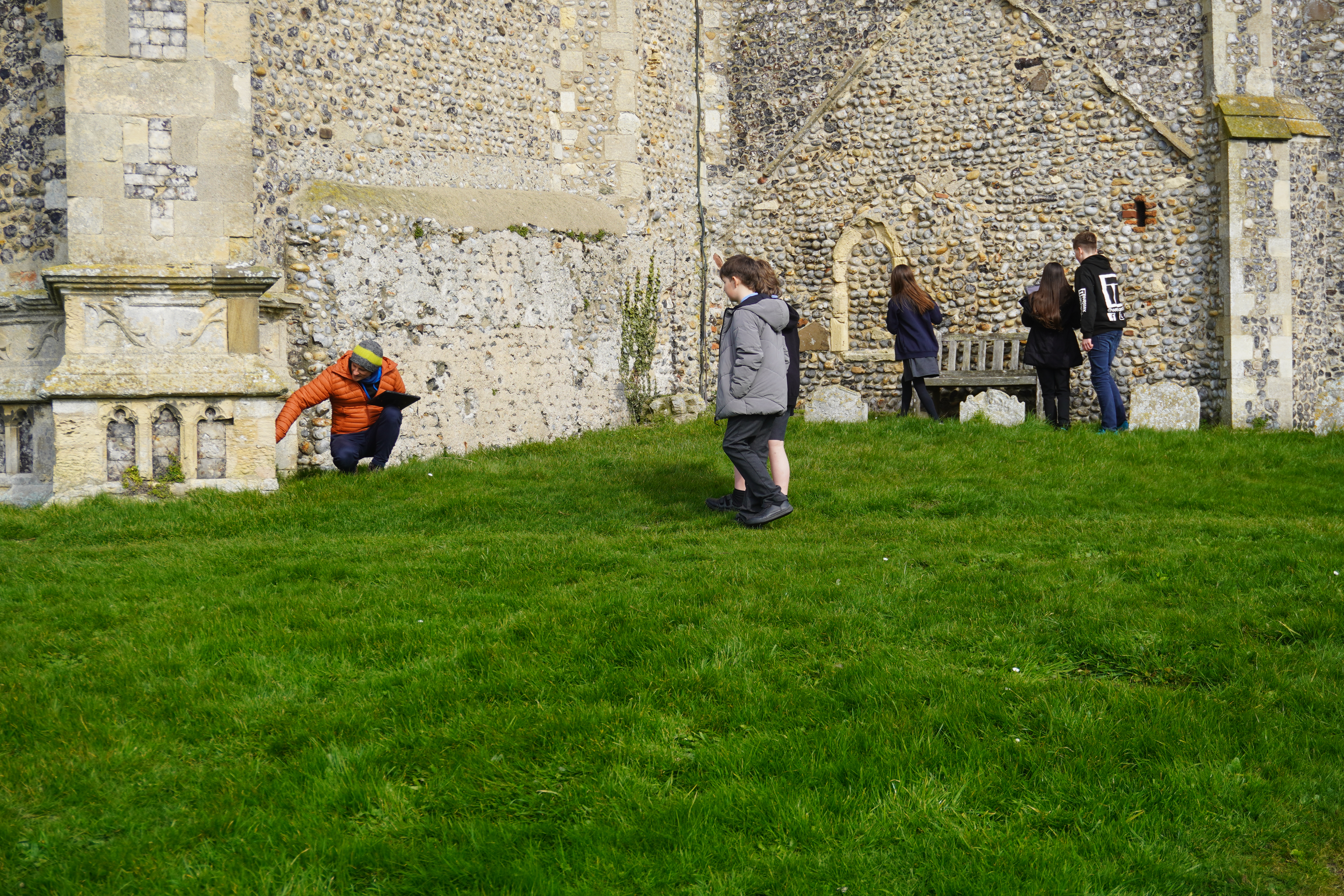
Wessex returned to Happisburgh on 18th March to deliver their Community Week. They were based within the church, giving the community of Happisburgh and others a chance to engage with the team to share their stories and memories. It was also an opportunity for them to learn how to use GoPro cameras and handheld LiDAR scanners and to scan different parts of the church and churchyard themselves.
Please click the link below to view the scans. Use your mouse or touchscreen to manipulate the object to rotate it in all directions:
The Wessex Team, Sam and Tom, engaged with all the children from Happisburgh Church of England Primary Academy. In addition, Wessex was approached by a teenager from the village who gained work experience with them over two days. The children also experienced three historic eras through a VR headset and explored artefacts created from 3D scanning, which were later 3D-printed.
The story was featured on ITV News and you can watch it here.
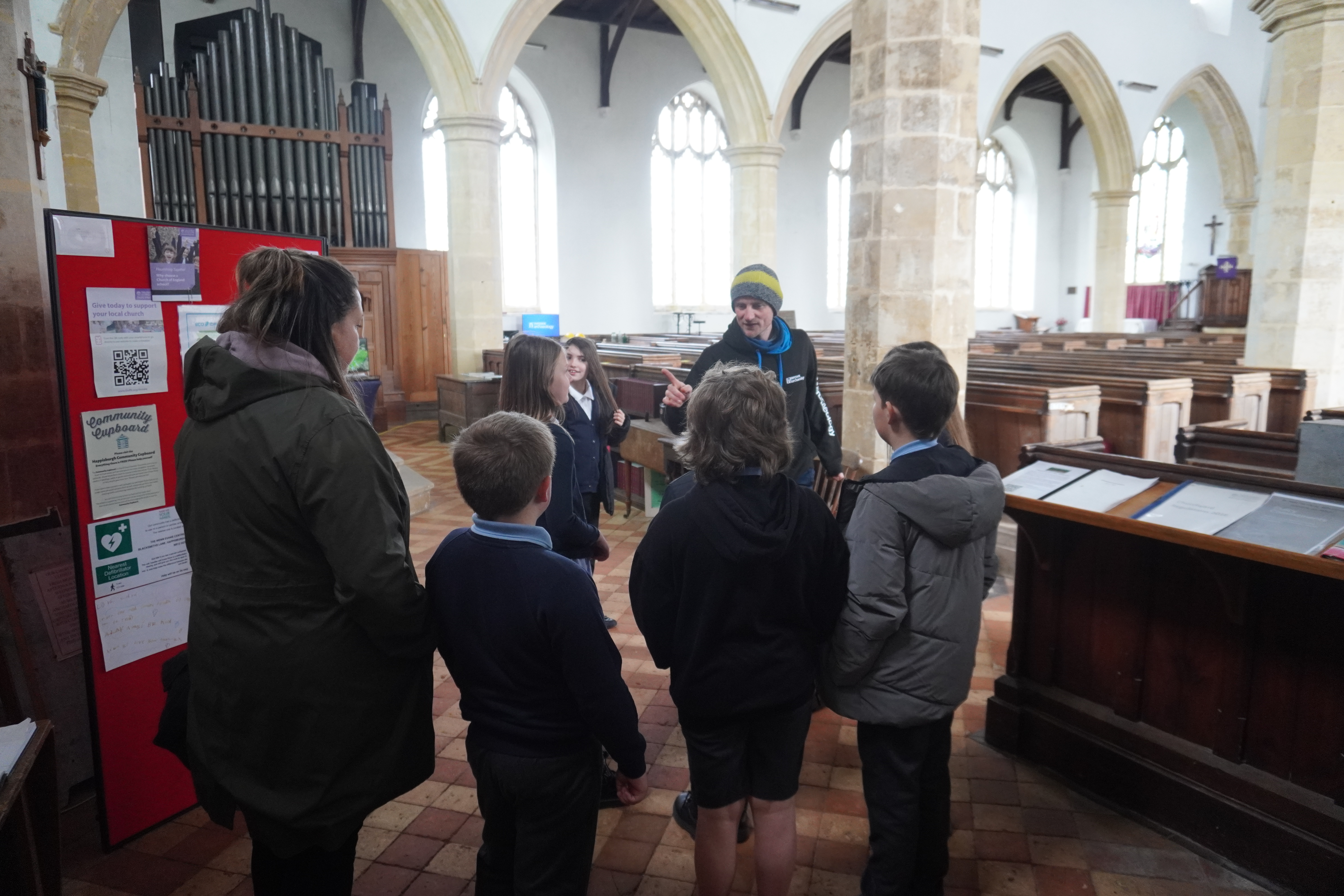
Wessex Archaeology also met with community members who attend the Lunch Hub at the Wenn Evans Centre on Wednesday and the Mind pop-up café on Tuesday afternoon. They visited the Happisburgh Lighthouse and the RNLI and received numerous visits from residents and other locals, engaging with over 150 people. Sam and Tom were interviewed for a group of A-level Media students at Paston College in North Walsham, who are currently creating two documentaries focusing on the lost villages of North Norfolk.
Wessex Archaeology captured some fantastic videos of stories and memories that will become part of the digital heritage platform once it is created. We can’t wait until all the processing is completed and we can share the finished product.
Last updated: 10th July 2026